
 ,
Atteqa Safdar,
Sara Iftikhar,
Khadija Amjad,
Muhammad Faraz Bhatti,
Sobia Asghar,
Muhammad Tahir,
Haziz Sina,
Muhammad Qasim Hayat
,
Atteqa Safdar,
Sara Iftikhar,
Khadija Amjad,
Muhammad Faraz Bhatti,
Sobia Asghar,
Muhammad Tahir,
Haziz Sina,
Muhammad Qasim Hayat
The Cashew nut (Anacardium occidental L.) tree is recognized for its medicinal importance and is widely used in many products for its therapeutic potential. However, the plant’s distribution is limited to tropical climates due to its sensitivity to frost. The aim of this study was to grow cashew nuts under a controlled environment and evaluate their potential for medicinal applications. Cashew nut seeds were germinated at 35°C and 55% humidity in a glasshouse. Fresh leaf of four-month-old cashew seedlings were collected, air-dried, and reduced to fine powder. The extraction was carried out by five-day maceration process using the powdered leaf into methanol. After five days, the solution was filtrated, and filtrate was stored at 4°C until utilization. Phytochemical screening was performed to characterize the extract. The antifungal potential was assayed against Aspergillus flavus and Candida albicans using the agar well diffusion method, while the antioxidant activity was evaluated through a 2, 2-diphenyl-1-picrylhydrazyl (DPPH) radical scavenging assay. It was found that the extract contained Alkaloids, Flavonoids, Phenols, Steroids, and Terpenoids. The cashew nut leaf extract demonstrated antifungal activity against A. flavus and C. albicans, with mean ± standard deviation values of 1.106 ± 0.03 cm and 1.17 ± 0.15 cm respectively. The extract exhibited concentration- dependent inhibition of DPPH radicals with high antioxidant activity (93.28%) at 100 μg/ml while 82.88% at 20 μg/ml. The finding suggests that cashew nuts cultivated in a controlled environment (glasshouse) can be used for medicinal purposes and further pharmaceutical applications.
| Published in | Science Futures (Volume 2, Issue 4) |
| DOI | 10.11648/j.scif.20260204.11 |
| Page(s) | 218-224 |
| Creative Commons |
This is an Open Access article, distributed under the terms of the Creative Commons Attribution 4.0 International License (http://creativecommons.org/licenses/by/4.0/), which permits unrestricted use, distribution and reproduction in any medium or format, provided the original work is properly cited. |
| Copyright |
Copyright © The Author(s), 2026. Published by Science Publishing Group |
Anacardium occidental L., Phytochemical, Antifungal Activity, Antioxidant Activity, Cashew Seedling, Medicinal Plant
Sr. No | Family of compounds | Type of test | Results |
|---|---|---|---|
1 | Alkaloids | Wagner’s | + |
2 | Flavonoids | Lead Acetate | + |
3 | Phenols | FeCl3 | + |
4 | Steroids | Salkowski’s | + |
5 | Terpenoids | cH2SO4 | + |
Sr. No | Concentration, μg/ml | Inhibition rate,% | |
|---|---|---|---|
Ascorbic acid | Cashew extract | ||
1 | 20 | 90 | 82.88 |
2 | 40 | 95 | 82.88 |
3 | 60 | 96.07 | 85.36 |
4 | 80 | 96.57 | 86.36 |
5 | 100 | 96.35 | 93.28 |
DPPH | 2, 2-diphenyl-1-picrylhydrazyl |
PDA | Potato Dextrose Agar |
UV/VIS | Ultraviolet/Visible |
| [1] | Bicalho B, Rezende CM. Volatile Compounds of Cashew Apple (Anacardium occidentale L.). Zeitschrift Für Naturforschung C 2001; 56: 35–9. |
| [2] | Dendena B, Corsi S. Cashew, from seed to market: a review. Agron Sustain Dev 2014; 34: 753–72. |
| [3] | Jose M, Mini C, Mareen A. Cashew Research and Development in Humid Tropics: With Emphasis on Cashew Apple Processing. 1st ed. Director of Extension, Kerala Agricultural University Mannuthy, Thrissur - 680 651; 2009. |
| [4] | Mubofu EB, Mgaya JE. Chemical Valorization of Cashew Nut Shell Waste. Top Curr Chem 2018; 376: 8. |
| [5] |
Jagdish. Cashew Farming, Planting, Care, Harvesting – A Full Guide 2019.
https://www.agrifarming.in/cashew-farming (accessed February 20, 2023). |
| [6] |
World Population Review. Cashew Production by Country 2026 2023.
https://worldpopulationreview.com/country-rankings/cashew-production-by-country (accessed March 9, 2023). |
| [7] | Barrett B. Medicinal Plants of Nicaragua’s Atlantic Coast. Econ Bot 1994; 48: 8–20. |
| [8] | Kudi AC, Umoh JU, Eduvie LO, et al. Screening of some Nigerian medicinal plants for antibacterial activity. J Ethnopharmacol 1999; 67: 225–8. |
| [9] | Chabi Sika K, Adoukonou-Sagbadja H, Ahoton LE, et al. INDIGENOUS KNOWLEDGE AND TRADITIONAL MANAGEMENT OF CASHEW (Anacardium occidentale L) GENETIC RESOURCES IN BENIN. 2013. |
| [10] | Onasanwo SA, Fabiyi RD, Oluwole FS, et al. Analgesic and anti-inflammatory properties of the leaf extracts of Anacardium occidentalis in the laboratory rodents. vol. 27. 2012. |
| [11] | Dharamveer P, Vimla P, Siddiqui HH. Antidepressant-Like Effects of Anacardium occidentale L. Leaves in the Mouse Forced Swim and Tail Suspension Tests. Pharmacologia 2015; 6: 186–91. |
| [12] | da Silva RA, Silvana Amado L, do Amaral FMM, et al. Antimicrobial and Antioxidant Activity of Antimicrobial and antioxidant activity of Anacardium occidentale L. flowers in comparison to bark and leaves extracts. J Biosci Med (Irvine) 2016; 04: 87–99. |
| [13] | Narasimhan B, Panghal A, Singh N, et al. Efficiency of anacardic acid as preservative in tomato products. J Food Process Preserv 2008; 32: 600–9. |
| [14] | Chaves MH, Antônia M das GLC, Lopes JAD, et al. Total phenolics, antioxidant activity and chemical constituents from extracts of Anacardium occidentale L., Anacardiaceaerdium occidentale L., Anacardiaceae. Revista Brasileira de Farmacognosia 2010; 20: 106–12. |
| [15] | Costa AR, José Weverton A-B, Teresinha G da S, et al. Phytochemical profile and anti-Candida and cytotoxic potential of Anacardium occidentale L. (cashew tree). Biocatal Agric Biotechnol 2021; 37: 102192. |
| [16] | Tan J, Yap W, Tan S, et al. Antioxidant Content, Antioxidant Activity, and Antibacterial Activity of Five Plants from the Commelinaceae Family. Antioxidants 2014; 3: 758–69. |
| [17] | Baptista A, Gonçalves RV, Bressan J, et al. Antioxidant and Antimicrobial Activities of Crude Extracts and Fractions of Cashew (Anacardium occidentale L.), Cajui (Anacardium microcarpum), and Pequi (Caryocar brasiliense C.): A Systematic Review. Oxid Med Cell Longev 2018; 2018. |
| [18] | Muniu Francis K, Mwashumbe S, Finyange P, et al. Cashew Nut Growing Guide. 2019. |
| [19] | Jones William P, Kinghorn AD. Extraction of Plant Secondary Metabolites. Natural Products Isolation, Totowa, NJ: Humana Press; 2006, p. 323–51. |
| [20] | Michael TM, John MM. Biology of Microorganisms. 11th ed. Pearson International Edition; 2009. |
| [21] | Thirach S, Tragoolpua K, Punjaisee S, et al. Antifungal Activity of Some Medicinal Plant Extracts Against Candida albicans and Cryptococcus neoformans. International Conference on Medicinal and Aromatic Plants (Part II), Budapest, Hungary: ISHS Acta Horticulturae; 2003, p. 217–21. |
| [22] | Hameed S. Antibacterial and antifungal activities of the crude extracts from the stem of Chenopodium ambrosioides Linn., an indiginous medicinal plant. Afr J Pharm Pharmacol 2014; 8: 231–4. |
| [23] | Burali S, Kulkarni AR. Antioxidant and Anti-colon cancer activity of fruit peel of Citrus reticulate essential oil on HT-29 cell line. Res J Pharm Technol 2013; 6: 216–9. |
| [24] | Verpoorte R. Exploration of nature’s chemodiversity: the role of secondary metabolites as leads in drug development. Drug Discov Today 1998; 3: 232–8. |
| [25] | Savithramma N, Linga RM, Suhrulatha D. Screening of Medicinal Plants for Secondary Metabolites. Int J Pharm Sci Res 2011; 2: 643–7. |
| [26] | Amira PO, Daramola AS, Muoghalu CE, et al. Comparative Studies on Phytochemical Screening and in Vitro Antioxidant Activities of Aqueous Extracts of Anacardium Occidentale Leaves and Nuts. European Journal of Biology and Biotechnology 2020; 1. |
| [27] | Oladele OO, Ishola MA. Activities of Leaf Extracts of Cashew (Anacardium occidentale L.) and Pawpaw (Carica papaya L.) against Mycelia Growth of Aspergillus Species Obtained from Decayed Cashew Fruits. Medicinal Plant Research 2017. |
| [28] | Tan YP, Chan EWC. Antioxidant, antityrosinase and antibacterial properties of fresh and processed leaves of Anacardium occidentale and Piper betle. Food Biosci 2014; 6: 17–23. |
APA Style
Karim, M., Safdar, A., Iftikhar, S., Amjad, K., Bhatti, M. F., et al. (2026). Phytochemical, Antifungal and Antioxidant Potential of Cashew (Anacardium Occidental L.) Leaf Methanolic Extract Grown Under Controlled Field for Medicinal Uses. Science Futures, 2(4), 218-224. https://doi.org/10.11648/j.scif.20260204.11
ACS Style
Karim, M.; Safdar, A.; Iftikhar, S.; Amjad, K.; Bhatti, M. F., et al. Phytochemical, Antifungal and Antioxidant Potential of Cashew (Anacardium Occidental L.) Leaf Methanolic Extract Grown Under Controlled Field for Medicinal Uses. Sci. Futures 2026, 2(4), 218-224. doi: 10.11648/j.scif.20260204.11
AMA Style
Karim M, Safdar A, Iftikhar S, Amjad K, Bhatti MF, et al. Phytochemical, Antifungal and Antioxidant Potential of Cashew (Anacardium Occidental L.) Leaf Methanolic Extract Grown Under Controlled Field for Medicinal Uses. Sci Futures. 2026;2(4):218-224. doi: 10.11648/j.scif.20260204.11
@article{10.11648/j.scif.20260204.11,
  author = {Mouguissou Karim and Atteqa Safdar and Sara Iftikhar and Khadija Amjad and Muhammad Faraz Bhatti and Sobia Asghar and Muhammad Tahir and Haziz Sina and Muhammad Qasim Hayat},
  title = {Phytochemical, Antifungal and Antioxidant Potential of Cashew (Anacardium Occidental L.) Leaf Methanolic Extract Grown Under Controlled Field for Medicinal Uses},
  journal = {Science Futures},
  volume = {2},
  number = {4},
  pages = {218-224},
  doi = {10.11648/j.scif.20260204.11},
  url = {https://doi.org/10.11648/j.scif.20260204.11},
  eprint = {https://article.sciencepublishinggroup.com/pdf/10.11648.j.scif.20260204.11},
  abstract = {The Cashew nut (Anacardium occidental L.) tree is recognized for its medicinal importance and is widely used in many products for its therapeutic potential. However, the plant’s distribution is limited to tropical climates due to its sensitivity to frost. The aim of this study was to grow cashew nuts under a controlled environment and evaluate their potential for medicinal applications. Cashew nut seeds were germinated at 35°C and 55% humidity in a glasshouse. Fresh leaf of four-month-old cashew seedlings were collected, air-dried, and reduced to fine powder. The extraction was carried out by five-day maceration process using the powdered leaf into methanol. After five days, the solution was filtrated, and filtrate was stored at 4°C until utilization. Phytochemical screening was performed to characterize the extract. The antifungal potential was assayed against Aspergillus flavus and Candida albicans using the agar well diffusion method, while the antioxidant activity was evaluated through a 2, 2-diphenyl-1-picrylhydrazyl (DPPH) radical scavenging assay. It was found that the extract contained Alkaloids, Flavonoids, Phenols, Steroids, and Terpenoids. The cashew nut leaf extract demonstrated antifungal activity against A. flavus and C. albicans, with mean ± standard deviation values of 1.106 ± 0.03 cm and 1.17 ± 0.15 cm respectively. The extract exhibited concentration- dependent inhibition of DPPH radicals with high antioxidant activity (93.28%) at 100 μg/ml while 82.88% at 20 μg/ml. The finding suggests that cashew nuts cultivated in a controlled environment (glasshouse) can be used for medicinal purposes and further pharmaceutical applications.},
 year = {2026}
}
TY  - JOUR
T1  - Phytochemical, Antifungal and Antioxidant Potential of Cashew (Anacardium Occidental L.) Leaf Methanolic Extract Grown Under Controlled Field for Medicinal Uses
AU  - Mouguissou Karim
AU  - Atteqa Safdar
AU  - Sara Iftikhar
AU  - Khadija Amjad
AU  - Muhammad Faraz Bhatti
AU  - Sobia Asghar
AU  - Muhammad Tahir
AU  - Haziz Sina
AU  - Muhammad Qasim Hayat
Y1  - 2026/09/09
PY  - 2026
N1  - https://doi.org/10.11648/j.scif.20260204.11
DO  - 10.11648/j.scif.20260204.11
T2  - Science Futures
JF  - Science Futures
JO  - Science Futures
SP  - 218
EP  - 224
PB  - Science Publishing Group
SN  - 3070-6289
UR  - https://doi.org/10.11648/j.scif.20260204.11
AB  - The Cashew nut (Anacardium occidental L.) tree is recognized for its medicinal importance and is widely used in many products for its therapeutic potential. However, the plant’s distribution is limited to tropical climates due to its sensitivity to frost. The aim of this study was to grow cashew nuts under a controlled environment and evaluate their potential for medicinal applications. Cashew nut seeds were germinated at 35°C and 55% humidity in a glasshouse. Fresh leaf of four-month-old cashew seedlings were collected, air-dried, and reduced to fine powder. The extraction was carried out by five-day maceration process using the powdered leaf into methanol. After five days, the solution was filtrated, and filtrate was stored at 4°C until utilization. Phytochemical screening was performed to characterize the extract. The antifungal potential was assayed against Aspergillus flavus and Candida albicans using the agar well diffusion method, while the antioxidant activity was evaluated through a 2, 2-diphenyl-1-picrylhydrazyl (DPPH) radical scavenging assay. It was found that the extract contained Alkaloids, Flavonoids, Phenols, Steroids, and Terpenoids. The cashew nut leaf extract demonstrated antifungal activity against A. flavus and C. albicans, with mean ± standard deviation values of 1.106 ± 0.03 cm and 1.17 ± 0.15 cm respectively. The extract exhibited concentration- dependent inhibition of DPPH radicals with high antioxidant activity (93.28%) at 100 μg/ml while 82.88% at 20 μg/ml. The finding suggests that cashew nuts cultivated in a controlled environment (glasshouse) can be used for medicinal purposes and further pharmaceutical applications.
VL  - 2
IS  - 4
ER  -
Atta Ur-Rahman School of Applied Biosciences, National University of Sciences & Technology, Islamabad, Pakistan
Atta Ur-Rahman School of Applied Biosciences, National University of Sciences & Technology, Islamabad, Pakistan
Atta Ur-Rahman School of Applied Biosciences, National University of Sciences & Technology, Islamabad, Pakistan
Atta Ur-Rahman School of Applied Biosciences, National University of Sciences & Technology, Islamabad, Pakistan
Atta Ur-Rahman School of Applied Biosciences, National University of Sciences & Technology, Islamabad, Pakistan
Atta Ur-Rahman School of Applied Biosciences, National University of Sciences & Technology, Islamabad, Pakistan
Atta Ur-Rahman School of Applied Biosciences, National University of Sciences & Technology, Islamabad, Pakistan
Department of Biochemistry and Cellular Biology, University of Abomey-Calavi, Abomey-Calavi, Benin
Atta Ur-Rahman School of Applied Biosciences, National University of Sciences & Technology, Islamabad, Pakistan
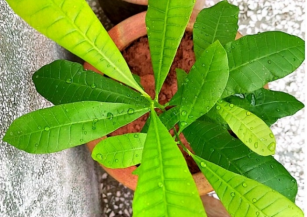
Figure 1. Cashew nut Seedling obtained from germination under glasshouse conditions.
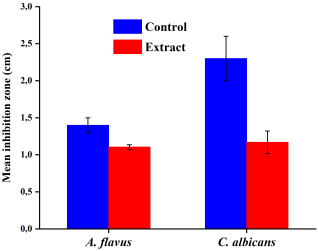
Figure 2. Mean inhibition zone of the cashew nut methanolic leaf extract against A. flavus and C. albicans. The means are from triplicates (n = 3) and vertical bars show standard deviation.
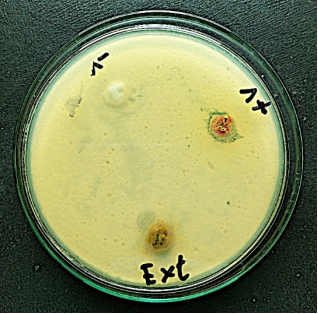
Figure 3. Antifungal activity of cashew nut methanolic leaf extract against Aspergellus flavus.
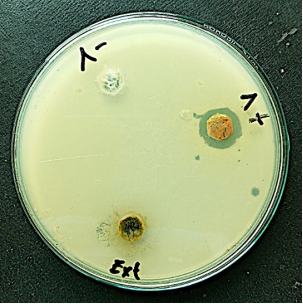
Figure 4. Antifungal activity of cashew nut methanolic leaf extract against Candida albicans.
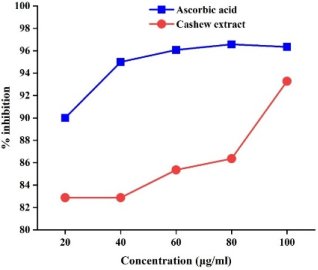
Figure 5. Antioxidant activity of cashew nut methanolic leaf extract.

Information


 Share This Article
 Twitter
 Linked In
 Facebook
 Copy
Copy Download